5 Minute Presentation On Social Media
A concise executive guide for delivering a 5 minute presentation on social media, covering strategic channel alignment, content calendars, governance, and reporting.
Free download · 4.9 MB11 editable slides · PowerPoint format
Download the editable PPTX
PPTX · 4.9 MB · 11 editable slides · Free to edit and reuse with attribution to Yiha.ai
View every slide
Use ← →, Home/End, or swipe on mobile
Delivering an executive presentation on social media within a strict five-minute limit requires concise organization and operational clarity. Rather than attempting a sweeping history of digital networks or reciting disconnected engagement numbers, a high-value briefing focuses on actionable governance. Leaders need to understand how communication channels connect to organizational goals, how content production is managed efficiently, and how performance is evaluated without relying on superficial metrics.
The Core Objective: Strategic Purpose Over Panic Posting
Many teams fall into reactive routines, publishing uncoordinated updates simply to maintain an active profile. A sustainable presence begins by replacing ad-hoc posting with a documented plan that connects social output directly to broader organizational objectives. In the framework outlined by Buffer in How to Create a Social Media Marketing Strategy in 2026 — 7-Step Guide, an authentic strategy must resolve four core questions: where you publish, who you reach, what value you provide, and how you evaluate whether the effort succeeds. A publishing calendar without this strategic direction operates merely as a transmission timetable.
Aligning channel activities with institutional goals requires deliberate focus. For example, a higher education department might use its channels to support prospective student inquiries and faculty research visibility, whereas a business software company focuses on category credibility and qualified customer inquiries. In both settings, each post should support a defined objective rather than simply taking up space on a feed. Without clear organizational objectives, creative teams expend time producing assets that yield no tangible business outcomes.
Conducting a Channel Audit and Retiring Dead Accounts
Before designing new campaigns, organizations must document their complete digital footprint across all platforms. An account audit catalogs active profiles, identifies neglected sub-brand handles, and uncovers unauthorized pages created without central oversight. Sprout Social explains in Social Media Audit: 11 Steps + Free Template | Sprout Social that auditing active and dormant accounts allows teams to establish baseline performance metrics, unify visual identity, and stop wasting budget on underperforming channels.
Neglected accounts present notable operational and security risks. When prospective partners or customers discover an official profile whose most recent post was uploaded years ago, they may question whether the organization is still operating. Retiring dormant profiles and consolidating redundant regional accounts protects brand reputation. The audit process also confirms that standard profile details, including website URLs, contact emails, headers, and descriptions, reflect current organizational positioning.
Structuring Balanced Themes with Content Pillars
Content pillars organize publishing schedules into thematic categories, preventing brand feeds from turning into repetitive promotional broadcasts. Semrush outlines in Social Media Calendar: How to Create One in 2026 that the rule of thirds offers a balanced planning framework: allocating one third of content to educational value and curated resources, one third to audience interactions and community dialogue, and one third to product or service promotion.
Distributing posts across structured pillars ensures that followers receive practical insights alongside necessary administrative announcements. As an illustrative example, a regional healthcare organization might divide its monthly calendar into preventative health tips, clinician interviews, public questions, and service line overviews. If audience engagement declines, managers can review the calendar mix to ensure self-promotional announcements have not overshadowed useful educational material.
Calendar Architecture: Standardizing Core Scheduling Fields
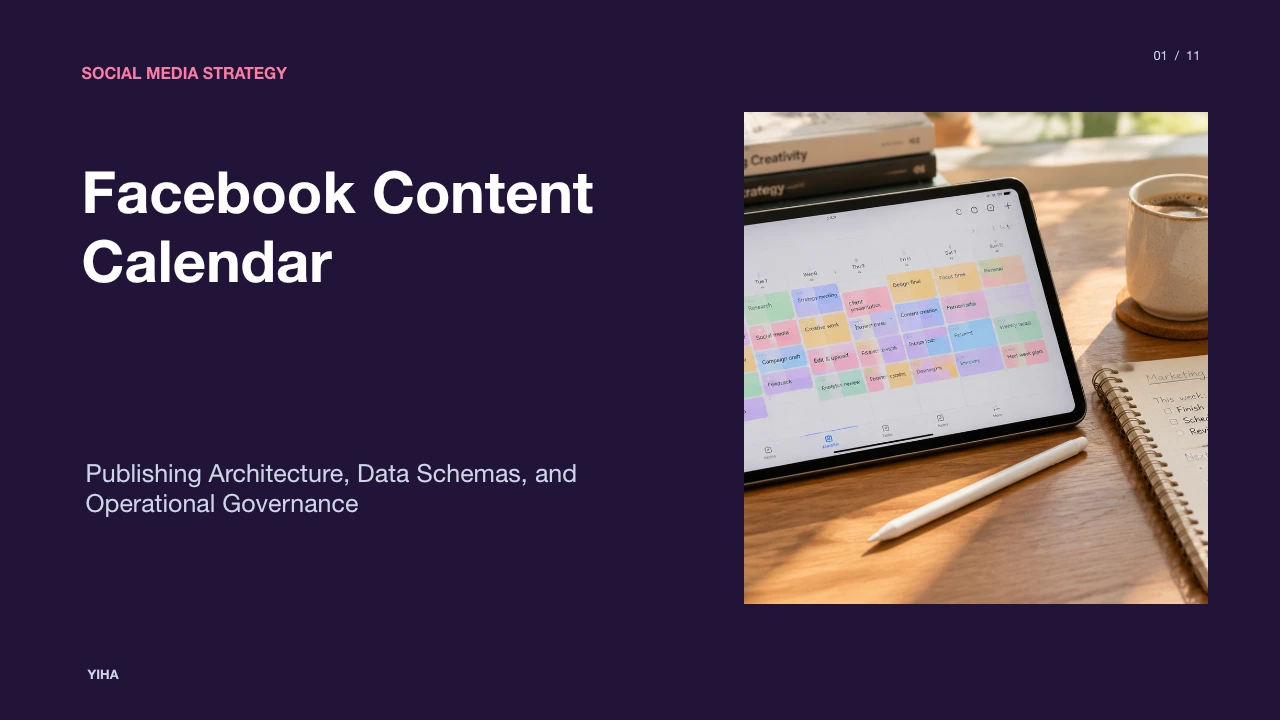
An editorial calendar serves as the operational bridge between strategic goals and day-to-day distribution. In Buffer's guide on how to Create A Social Media Content Calendar (7 Simple Steps), standardizing scheduling fields prevents operational confusion and keeps cross-functional teams aligned. A dependable calendar records the target publication date, publishing time, platform destination, exact copy text, asset links, content pillar, and the specific call to action.
Standardizing fields also minimizes bottlenecks during editorial review. When copywriters, visual designers, and department directors work from a shared layout, reviewers can evaluate tone, factual claims, and image formatting well before release. This workflow helps teams identify scheduling gaps days ahead of time, eliminating morning scrambling and replacing reactive work with deliberate, organized scheduling.
Driving Reach Through Conversational Engagement Loops
Social platform distribution systems favor authentic discussions over static broadcasts. Buffer's research study, The State of Social Media Engagement in 2026: 52M+ Posts Analyzed, highlights that conversational interactions like direct comment replies correlate with community responsiveness across modern networks. Feeds favor accounts that participate in reciprocal exchanges over organizations that use channels strictly as one-way promotional outlets.
Organizations can cultivate conversational loops by combining educational posts with focused questions, structured feedback polls, and prompt answers to inbound comments. When subject matter experts answer reader questions within post comments, the exchange turns a basic announcement into an informative discussion. This approach strengthens relationships with community members and signals to platform systems that the content offers relevant, ongoing dialogue.
Decoupling Production from Publishing via Automation
Drafting and publishing posts manually throughout the business day causes constant context switching, harming both creative quality and staff productivity. Sprout Social's review of 13 Social Media Automation Tools for 2026 | Sprout Social demonstrates that automation software separates content authoring from scheduled delivery. By creating content in weekly or bi-weekly batches, teams protect focused working blocks while sustaining steady publishing cadences.
Automation systems can also examine engagement trends to release updates during optimal audience viewing windows. However, automation requires clear operational boundaries. Pre-scheduled publishing queues must be paused during organizational emergencies or sensitive breaking news to prevent tone-deaf posts. Batch creation handles administrative delivery mechanics, leaving staff members free to focus on genuine live interactions and timely customer care.
Tailoring Formats to Distinct Platform Mechanics
Distributing identical posts across different platforms ignores varying user expectations and technical conventions. Buffer's overview in 20+ Top Social Media Platforms to Grow Your Brand in 2026 notes that each platform supports distinct content formats and audience mindsets. Professional networks like LinkedIn focus on workplace analysis, industry news, and career perspectives. In contrast, short-form video channels prioritize dynamic visuals and concise explanations, while text-first networks emphasize real-time conversations.
Attempting to maintain active profiles across every platform quickly overburdens staff resources. Strategic discipline means selecting two or three core channels where key stakeholders spend their time. Adapting a single research topic into platform-appropriate assets, such as an analytical text post for professional feeds and a concise visual graphic for image networks, preserves core messaging while honoring platform conventions.
Governance and Account Security Safeguards
Operating social accounts without formal governance guidelines creates major compliance and security vulnerabilities. Sprout Social points out in Social Media Policy: A Guide for Brands [Template] | Sprout Social that a clear corporate policy outlines standards for employee representation, mandatory security rules like two-factor authentication, and explicit protocols for legal and privacy compliance.
Sound governance establishes clear credential permissions so team members avoid sharing master account passwords across insecure communication channels. Centralized management tools provide tiered drafting and approval rights, allowing junior contributors to prepare posts without administrative access. Governance policies must also provide communication teams with pre-approved responses for handling critical feedback, service issues, and regulatory inquiries consistently.
The Quarterly Performance Review and Iteration Cadence
Executive reporting should look beyond surface-level follower totals to examine meaningful organizational impact. In Buffer's evaluation of 12 Social Media Metrics You Should Be Tracking (And Why), follower counts represent theoretical reach rather than concrete user action. Sustainable marketing programs measure engagement indicators such as content shares, thoughtful comments, qualified referral clicks, and direct customer conversions.
Following a quarterly review cycle gives marketing teams sufficient time to observe engagement trends, test new post formats, and adjust staff time allocation. Sharing quarterly findings with leadership clarifies which content pillars reached their goals and which fell short, justifying future budget choices. This ongoing evaluation process ensures digital communication remains an accountable, productive organizational practice.
Research sources
- How to Create a Social Media Marketing Strategy in 2026 — 7-Step Guide · buffer.com
- Social Media Calendar: How to Create One in 2026 · www.semrush.com
- The 15-Minute Social Media Audit Everyone Can Do · buffer.com
- Social Media Audit: 11 Steps + Free Template | Sprout Social · sproutsocial.com
- 15 AI Prompts for Social Media Content Calendars · www.theailibrary.co
- Create A Social Media Content Calendar (7 Simple Steps) · buffer.com
- The State of Social Media Engagement in 2026: 52M+ Posts Analyzed · buffer.com
- 13 Social Media Automation Tools for 2026 | Sprout Social · sproutsocial.com
- 20+ Top Social Media Platforms to Grow Your Brand in 2026 · buffer.com
- Social Media Policy: A Guide for Brands [Template] | Sprout Social · sproutsocial.com
- 12 Social Media Metrics You Should Be Tracking (And Why) · buffer.com